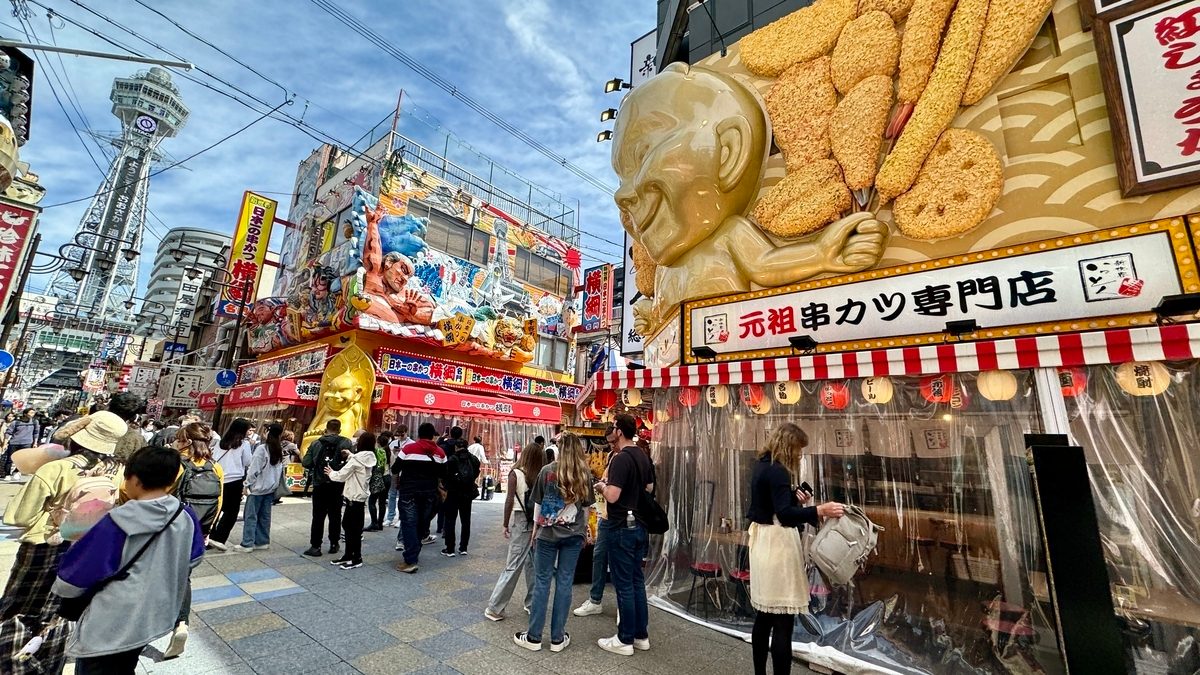
Shinsekai is defined by its deep-fried skewers and beef simmered in miso, served in dense clusters of nostalgic eateries. While the area surrounding Tsutenkaku features many well-known storefronts, venturing into the smaller alleys often reveals less crowded establishments with similar traditional fare.
restaurant
A landmark establishment for kushi-katsu, located just steps from the Tsutenkaku tower base. It is known for its original dipping sauce and standardized menu.
restaurant
Situated along the Janjan Yokocho arcade, this venue specializes in kushi-katsu featuring a lighter, fluffy batter. It is a preferred spot for those seeking a more local dining atmosphere.
street
Small, casual stands found throughout the Shinsekai district serve doteyaki, a signature dish of beef tendon simmered in miso and mirin. These provide a quick, authentic way to sample local flavors while walking between sites.
restaurant
Located in the heart of Shinsekai, this restaurant is highly regarded for its doteyaki and traditional kushi-katsu offerings. It remains a staple for visitors interested in the historical culinary style of the district.
Arriving within the best arrival window of 09:00–16:00 is essential for a smooth culinary experience. Visiting during these hours allows you to secure seating at popular kushikatsu spots before the peak dinner rush and long elevator queues begin.
—
Visiting early allows access to local eateries before the midday lunch peak.
—
Popular restaurants experience significant wait times as locals and tourists gather.
Mild temperatures (15–22°C)
Pleasant weather increases foot traffic, making early arrival crucial for securing a table.
Verdict: Plan your visit for Tuesday to Thursday, arriving at 09:00, during the months of April or October for optimal conditions.
Shinsekai offers diverse dining options ranging from quick street food snacks to traditional sit-down meals. A typical culinary budget depends on whether you prefer casual standing dining or a full service restaurant experience.
How to spend less
Verdict: Expect to spend between 2,000 JPY and 5,000 JPY per person depending on your choice of dining style.
Shinsekai is located in the Naniwa-ku district of Osaka and is accessible via several nearby rail lines. The most direct approach to the district's food streets is via the Osaka Metro or JR lines.
Sakaisuji Line to Ebisucho Station
JR Loop Line to Shin-Imamiya Station
Midosuji Line to Dobutsuen-mae Station
To make the most of your visit, plan your arrival between 09:00 and 16:00 to avoid sunset crowds and long elevator queues at the nearby Tsutenkaku tower, located at 1-18-6 Ebisuhigashi, Naniwa-ku, Osaka, 556-0002, Japan.
Tsutenkaku Tower maintains consistent daily operating hours, providing a reliable landmark for planning your food tour of Shinsekai.
Everything you need to know about what to eat at shinsekai
Kushikatsu, which consists of deep-fried skewered meat and vegetables, is the defining dish of the district. You should prioritize visiting established kushikatsu specialty shops to enjoy the authentic flavor profile of this local staple.
The area is famous for kushikatsu and doteyaki, a savory beef tendon stew simmered in miso. These hearty dishes reflect the working-class origins of this vibrant historic neighborhood.
To avoid the largest crowds at nearby attractions like Tsutenkaku Tower, plan your meals between 09:00–16:00. This window helps you bypass long lines and secure seating at popular eateries more easily.
Many establishments in the district are casual and welcoming to families, making it simple to find seating for children. The deep-fried nature of many snacks is generally appealing to younger palates.
Unlike the modern commercial districts in Osaka, this neighborhood offers a nostalgic atmosphere with many retro-style shops. It provides a distinct, grassroots culinary experience that contrasts with the refined dining found elsewhere in the city.
While the area is meat-centric, some specialty shops have begun offering vegetable-only skewers to accommodate different dietary preferences. It is recommended to check individual shop menus or inquire about ingredients before entering.
Kushikatsu remains the primary recommendation for anyone wondering what to eat at shinsekai. The combination of crispy batter and various dipping sauces provides a quintessential Osaka dining experience.